At 11:45 p.m. Friday, District Court Judge Tanya Chutkan issued a 14‑day injunction that freezes any construction of President Trump’s proposed 250‑foot arch at Washington, D.C.’s Memorial Circle. The order came after a rush of legal filings from the District of Columbia and Virginia, and it follows a controversial 8‑to‑4 vote by the National Capital Planning Commission that had given the project final approval only hours earlier.
Judge Issues 14‑Day Halt on Trump Arch
Chutkan’s 33‑page opinion scrutinized the administration’s justifications—particularly the sudden emphasis on national security—and concluded that the local governments would suffer significant logistical and financial harm if the arch were erected. The judge agreed that the project would disrupt traffic on the iconic bridge linking the Lincoln Memorial to Arlington National Cemetery, and that these harms would materialize immediately.
Legal Grounds and Court Decision

The injunction stems from lawsuits filed by the D.C. and Virginia governments, which argue that the arch lacks Congressional approval and violates federal environmental and historic‑preservation laws. A 1925 act authorizing two 166‑foot columns on Memorial Circle is the only congressional authorization the Trump administration cites, but Chutkan rejected the claim as “preposterous.” She noted that the arch would be 250 feet tall and would alter a view that has been deliberately kept clear for decades.
National Capital Planning Commission Vote
The National Capital Planning Commission, a body heavily weighted in favor of the Trump administration, approved the arch in a virtual meeting that faced nearly nine hours of public testimony. Veterans, lawmakers, historians and residents—131 people in total—pushed back against the project, arguing that it would insult those buried in Arlington National Cemetery and compromise the city’s complex airspace.
Local and Veterans Opposition
Veteran groups led the protest, with families of those buried at Arlington speaking out. “We cannot approve final site and building plans until we have the full details,” said D.C. Council Chair Phil Mendelson, a Democrat on the commission. He introduced a motion to postpone the vote, which failed 4‑to‑8. The injunction effectively pauses any construction that the Trump administration had claimed could begin “20 hours a day, year‑round.”
National Security Claims Under Scrutiny
The administration has repeatedly cited national security as a justification for the arch, claiming it will house snipers and other military equipment. Defense Secretary Pete Hegseth described it as a “dual‑purpose structure.” However, the court found no substantive security analysis in the planning documents, and an interior‑department official admitted that any specific security functions were filed under seal and not shared with the National Park Service.
Future Safeguards and Congressional Action
Rep. Don Beyer introduced a bill aimed at prohibiting and defunding the arch, while Rep. Jared Huffman warned that officials could face legal risk. Both Democrats argue that the project violates the Commemorative Works Act and federal environmental statutes. The outcome of these legislative efforts will shape whether the arch can ever move beyond the injunction.
Public Reaction and Protest
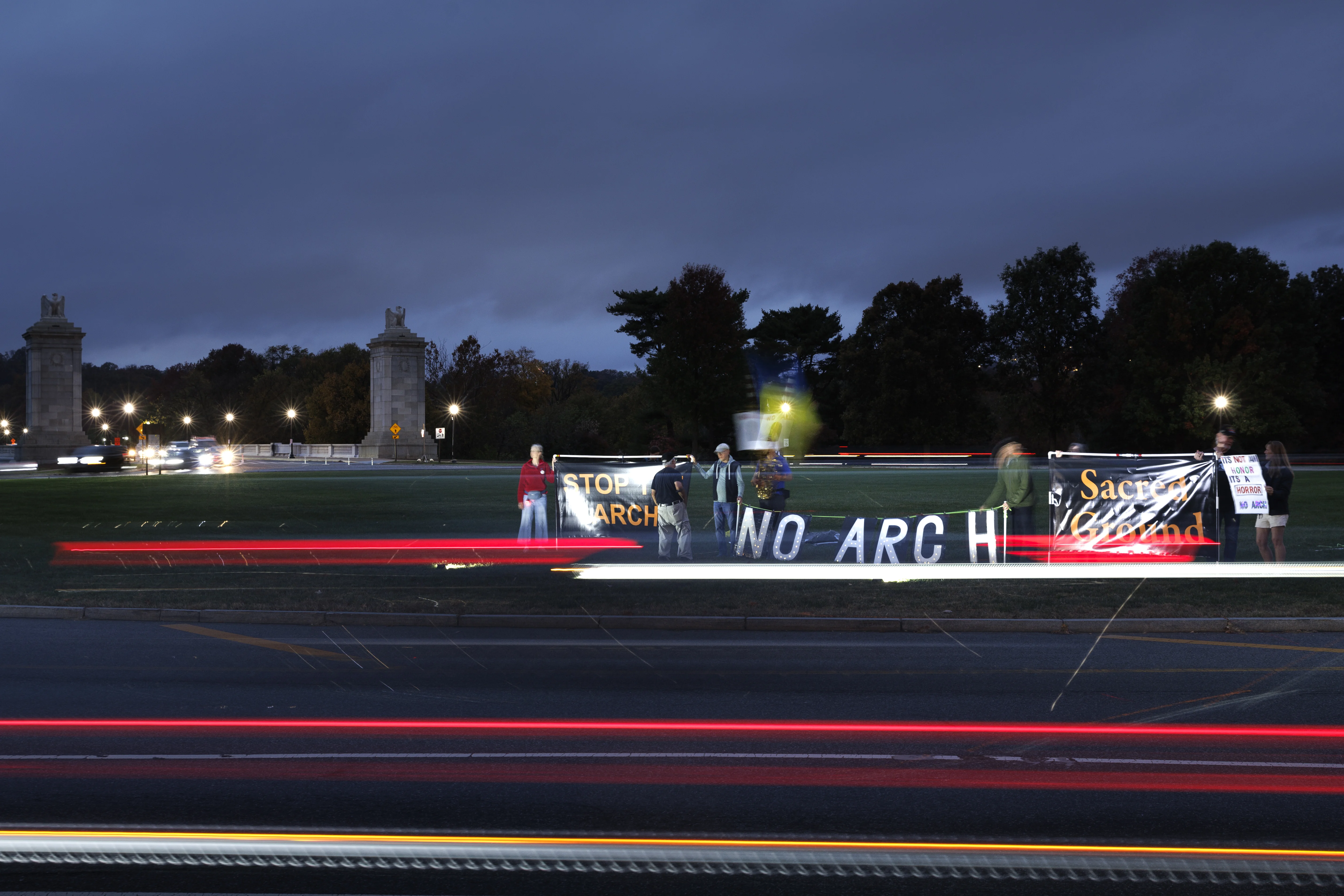
Demonstrators gathered at Memorial Circle on Thursday, painting the grass white and holding a miniature arch mock‑up. Historic preservationists slammed the commission’s approval as a “sham.” The White House, on the other hand, unveiled a website titled the “Military Triumphal Arch,” featuring an AI‑generated video of the finished structure. Critics see the site as an attempt to distract from the legal and public‑interest concerns that have kept the construction at a standstill.
As the judiciary and Congress weigh their options, the future of Trump’s ambitious monument remains uncertain. The 14‑day halt is just the first stop on a legal battle that many say will ultimately decide whether the capital can bear another symbol of presidential self‑aggrandizement.



💬 Comments & Discussion (0)
Be the first to share your thoughts on this article!